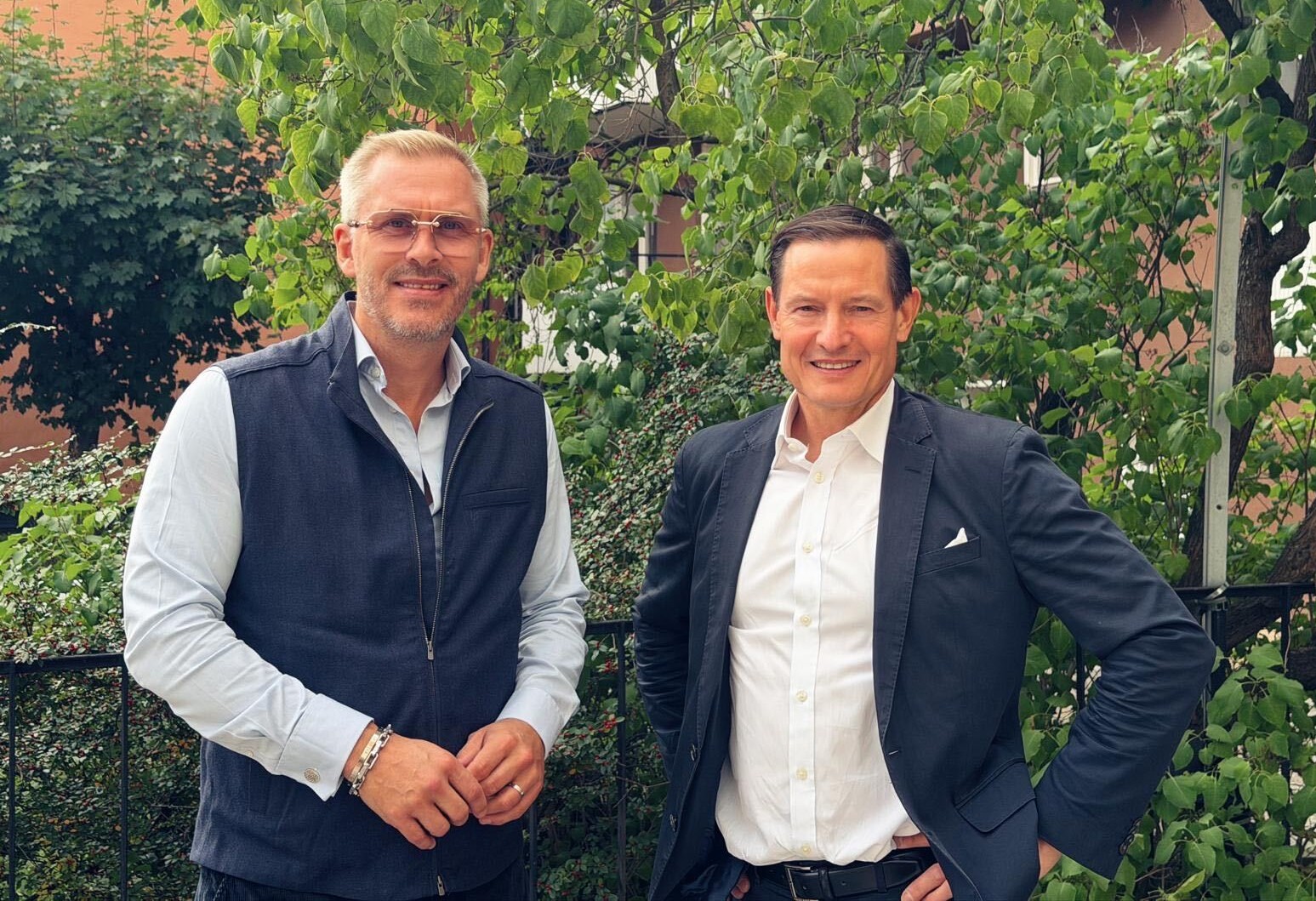
Dahlgren Capital Market House View: October 2025
This month, we would like to share three topics with you: The US equity boom, European sluggishness and a Swedish possible revival.
The US stock market
American stock markets are breaking records – despite tariffs and Government shutdown. Momentum is strong and the upward march may continue for a while longer, in particular if the Fed lowers its policy rate as is widely expected. The market boom has positive repercussions, as the wealth effect probably is one reason the US economy has shown surprisingly strong resilience to the Trump tariffs.
However, there are also increasing tensions. The bull market is concentrated to the big tech companies; In fact, the concentration of value is the highest in modern times. A growing unease is visible among analysts as the concentration makes the market vulnerable. The racing gold price indicates that investors are seeking protection from possible future storms.
Valuations are also high, although earnings capacity is good. However, profit trends are not easy to interpret, as they can yield both positive and negative conclusions. On the one hand, unusually high profits are of course positive. On the other hand, profits have previously been this high only just before dramatic stock market declines. The optimist is happy about the present level; the pessimist is scared by history.
For Dahlgren Capital, being active long-term investors, now is not the time to enter the public stock market
Europe: still sluggish
A little more than a year ago, Mario Draghi published his fat report about European competitiveness. He presented a long list of reforms to improve decision-making, increase investments and stimulate innovation in the European Union. Given the need to stand up against Russia and the need for less reliance on the US, quite a few analysts – us included – saw this is a catalyst for European revival. As Germany scrapped its strict fiscal rule, while the US shot itself in the foot with Liberation Day tariffs, European stocks soared.
But the reinvigoration was short-lived. Preliminary numbers indicate that during Q3, US GDP grew by almost 4 per cent annualised while Euro Zone GDP was almost unchanged. The ramp-up in European defence spending is slow, so far, while the underlying structural problems remain unsolved. The biggest economy, Germany, still suffers from high energy costs and stiff competition from China. Several others are bogged down by high public debt burdens.
Most ominous from a long-term point of view is the political inertia. Decision-making is slow – and when it comes to structural reforms a snail would do better. More effort seems to be wasted on preserving regulations that are an impediment to growth. Furthermore, the traditional parties of government in several important countries are shrinking, while nationalist and populist parties are rising. They are normally dead against the kind of union-wide and federalist reforms Draghi proposed. In Eastern Europe, the number of nationalist governments is rising which will complicate decision-making even more.
While structural change is lethargic, fiscal problems are worsening in several countries. The combination of growing debts and political ineptitude is dangerous. France is in a perpetual political crisis, where the centrist president cannot push through a budget while both the right and the left have veto power. The outcome could be either a new populist or left-leaning government which probably would loosen the budget even more and trigger a new wave of market sell-off. A new right-leaning government might pursue another attempt at austerity, which would cause a recession. Either way, the outlook is bleak.
Contagion from France to financial markets all over Europe have so far been limited as the outlook for public finances elsewhere is less worrying. Also, the ECB has ammunition to fight contagion in its “Transmission Protection Instrument”. However, outside the union, the UK has lost the market’s confidence and risks of financial turbulence are increasing.
Cyclically, growth in the Euro Zone is slowly picking up, albeit from a very low level. On the European aggregate level inflation is close to the ECB’s target, but on the national level inflation varies quite a bit. The bank has no room for any forceful monetary stimulus. The present level of the key rate thus is too high for the sluggish core economies on the continent but too low for the more rapidly growing countries in the periphery. As fiscal policy is in a deadlock, we don’t foresee any successful stabilisation policy which may help the cyclical upturn.
A Swedish revival?
Sweden is in a protracted recession. One reason is households' caution and reluctance to consume, partly driven by fear of a come-back of inflation. Now, however, there are hopeful signs this may change.
Ahead of 2026, the variable mortgage rate will be lowered slightly, in the wake of the Riksbank’s recent key rate cut. More importantly, strong stimulus to private consumption will be provided via fiscal policy. Sweden’s Government debt is low, and the ruling coalition sees the opportunity to support households during election year 2026. This will come through several channels: income tax cuts, lower VAT, infrastructure investments etc.
Reduced VAT on food is generally not something we support, since it makes the tax system even more hotch-potch. But in this situation, it may provide some short-term help. The tax cut is likely to temporarily lower both inflation and – psychologically important - the price level of food in 2026. Thus, it may help heal the inflation scars households are feeling since the previous inflation peak in 2022. Disposable income will increase strongly. Already, we see sentiment indicators moving up, even before the tax cuts have taken effect. All in all, there are benign conditions for a rebound in consumption and a cyclical upturn in GDP.
While inflation will get an extra push down courtesy of the VAT cut, this is temporary. After a year, base effects kick in and push 12-month inflation numbers up. And, of course, if the VAT cut really will be temporary (which the Government states but nobody believes) there will be an uptick of inflation when VAT is hiked again. Our conclusion is that the Riksbank for now will see through all these temporary effects and keep the key rate steady.
The multiplier effect of disposable income on construction and investments should be positive. Bond yields may rise slightly and the yield curve turns more positive. As Sweden picks up speed, we believe the SEK will strengthen further.
Hans Sterte & Klas Eklund
Dahlgren Capital
*Disclaimer: This monthly letter is for informational purposes only and should not be construed as financial or investment advice. It does not constitute an offer to buy or sell any security or financial product, nor does it provide an explicit or implicit investment recommendation. The views expressed reflect current market conditions and are subject to change. We strongly encourage readers to conduct their own research and seek independent financial, legal, or other professional advice before making investment decisions. Neither the authors nor Dahlgren Capital accept any liability for any loss or damage arising from reliance on this analysis.