Dahlgren Capital Market House View: February 2026
Global financial markets are in a flux. The macro background is fairly stable – albeit sluggish – in Europe, more uncertain in the US. The US Federal Reserve may be in for an overhaul with its new boss. The geopolitical background is messy, with several outcomes regarding tariffs, military adventures and economic sanctions possible – affecting different sectors and companies in very different ways. Hence, some assets are racing, some struggling. We also saw from the latest quarterly reports that even small beats och misses can lead to major effects on individual shares. Also, the big swings in the silver, gold and bitcoin markets could be interpreted as moving from a situation with calculable risks to one with incalculable uncertainty.
The macro picture
The Euro area shows some signs of life after a listless year. Manufacturing and household sentiment are gradually improving. On top of that, public investments in infrastructure and defence are increasing. These trends will strengthen in 2026. At the same time, inflation is close to the ECB target and will probably remain so. This means that the ECB is rather comfortable and will let its key rate remain stable.
In The US, the situation is more complicated. The tariffs imposed by President Trump have not yet caused the damages projected by most economists. GDP growth is strong, propelled by investments in AI, data centres and energy; the bull market in stocks has also had a strong wealth effect on consumption for the well-to-do. However, the labour market is weak, characterised jobless growth. At the same time, inflation is still sticky, and a large part of the tariff effects on prices may simply lag – which means we might see them this year.
This causes a conundrum for the Fed. Hike against inflation or cut against labour weakness? The White House has pressed the Fed Chair to cut, but Mr Powell has protected Fed independence, backed by many colleagues from other central banks and previous American policy makers. Markets have nonetheless priced in three more rate cuts this year, betting on the weak labour market and a new Fed chair.
Now, Mr Trump has nominated Kevin Warsh for the next Fed chair. Warsh has indeed gone on the record recently, demanding lower rates, arguing that AI will boost productivity and thus put pressure downward on inflation. Thus, he sounds like someone who would push for the kind of soft monetary policy the President wants. However, Warsh has also argued for a smaller balance sheet for the central bank; and in his previous stint on the Fed board, he was regarded as hawkish.
While the odds have improved for further rate cuts, we are not assured the new Fed leadership will move as fast as the President hopes. It is an open question how the whole Open Market Committee will vote. It is possible that monetary policy will be a bit tighter than the market expects, since the Fed may begin again to reduce its balance sheet. Shrinking the balance sheet would, according to Warsh, open the door for more rate cuts. This, however, is not a clear-cut case; several economists believe it could complicate monetary policy as it may drain the system of liquidity at crucial times.
The geopolitical picture
Many hoped that 2026 would be calmer than last year. That was wrong. In just one month, President Trump has lashed out against Venezuela, threatened Cuba, as well insulted Denmark and Europe, stating he “needs” Greenland – and now seems to be preparing a strike against Iran. New tariff threats have been hurled at rivals and allies alike. All in all, this has fed exasperation with Trump’s antics and has weakened American soft power.
This seems to finally have pushed European leaders to heed Mark Carney’s call for more independence from the US and for more co-operation between medium-sized and small states. More concretely, this will materialise in free trade agreements with other countries than the US as well as a rapid beefing up of defence and infrastructure. In Carney’s words, this may well be a “rupture” of the old transatlantic co-operation and the beginning of a new world order. The Economist recently said that the events of this year will shape the next decade…
Financial markets
As momentous as geopolitical ruptures are, they have not shaken stock markets. Most indices in developed countries have continued their bull run. Obviously, markets don’t see geopolitical threats as something which threatens profits or valuations, at least not in the short term. The TACO trade has remained dominant.
We acknowledge that. However, there are longer-term threats inherent in TACO. Firstly, if markets are complacent even with Trump’s most outlandish power plays, he may get encouraged to hike the stakes even more – until markets react with a bang. Secondly, if markets remain complacent, the pressure eases on Europe to shape up its act. So TACO implies a fine balancing act, which, we fear, can become quite volatile. Also, a strike on Iran may entail some turbulence in oil prices.
Furthermore, even if equity markets have remained stable, currency markets have not. Bond yields have stayed elevated despite low key rates. This indicates that fixed income investors are increasingly worried about inflationary effects from trade wars and increasing debt levels. Term premia have risen. At the same time, the USD has weakened, while gold and silver have raced. In market lingo, this has been dubbed “debasement trade”. However, the initial rection to the nomination of Warsh was a fall of gold and silver, which indicates market relief.
There has been a slow, but noticeable rotation in American assets during the last few months. For example, Information Technology (except the Mag7), Healthcare and Energy have all beaten Mag 7. A moderate but very needed sector rotation may thus be underway in the USA. There has also been a cautious but noticeable rotation out of American assets. Gold has drastically increased its share of reserves in Central banks – but that is not because banks are dumping dollars for gold – it is because the price of gold has gone up. We do not see a concerted sell-off of treasuries – but rather a slower rate in buying new ones. Of course, this may change, but right now we don’t see danger signals flashing.
On the contrary, strong profits, combined with expansionary monetary and fiscal policy in the US will keep stock markets happy. Markets expect Kevin Warsh to be able to push through rate cuts and thus help boost equity markets even more. At the same time, he is not regarded as someone who dismisses inflationary risks totally. Our conclusion is therefore that FOMO and momentum will dominate equity markets for some time yet.
Still, longer term, this is where we see the greatest risk. Should Governor Warsh surprise us with aggressive rate cuts, while American inflation still refuses to come down, we might see a clearer uptick of long bond yields and a steeper yield curve. This seems to be pretty much in line with his general view of inflation: the general direction of the price level depends less on key interest rates (which move the demand side) and more on liquidity (the long-term supply side). Thus, he – as well as the Treasury Secretary, Mr Bessett – wants to stop the Fed’s implicit support for lax fiscal policy through buying treasuries. But the execution is risky – previous attempts to drain the system of liquidity have sometimes caused market turbulence – and we do not know whether the rest of the FOMC will follow him down this road.
Such a shift of monetary strategy has opposing effect on the currency: lower key rates will weaken the USD while higher bond yields should strengthen it. The net effect is unclear, but our hunch is that a gradual shift of international investors out of American assets will continue to exert a net downward press on the USD. If this – contrary to what’s common – continues to sink the dollar, then we see future risks for equities. A particular risk here is a continued rise of Japanese yields, will cause a demise of the yen-carry trade, and lower demand for risky assets outside Japan.
To conclude: The world is messy. But for the foreseeable future, optimistic profitability projections will keep the stock rally going. Over time though, tensions are building. The main threat is a combination of a weaker dollar and higher American bond yields.
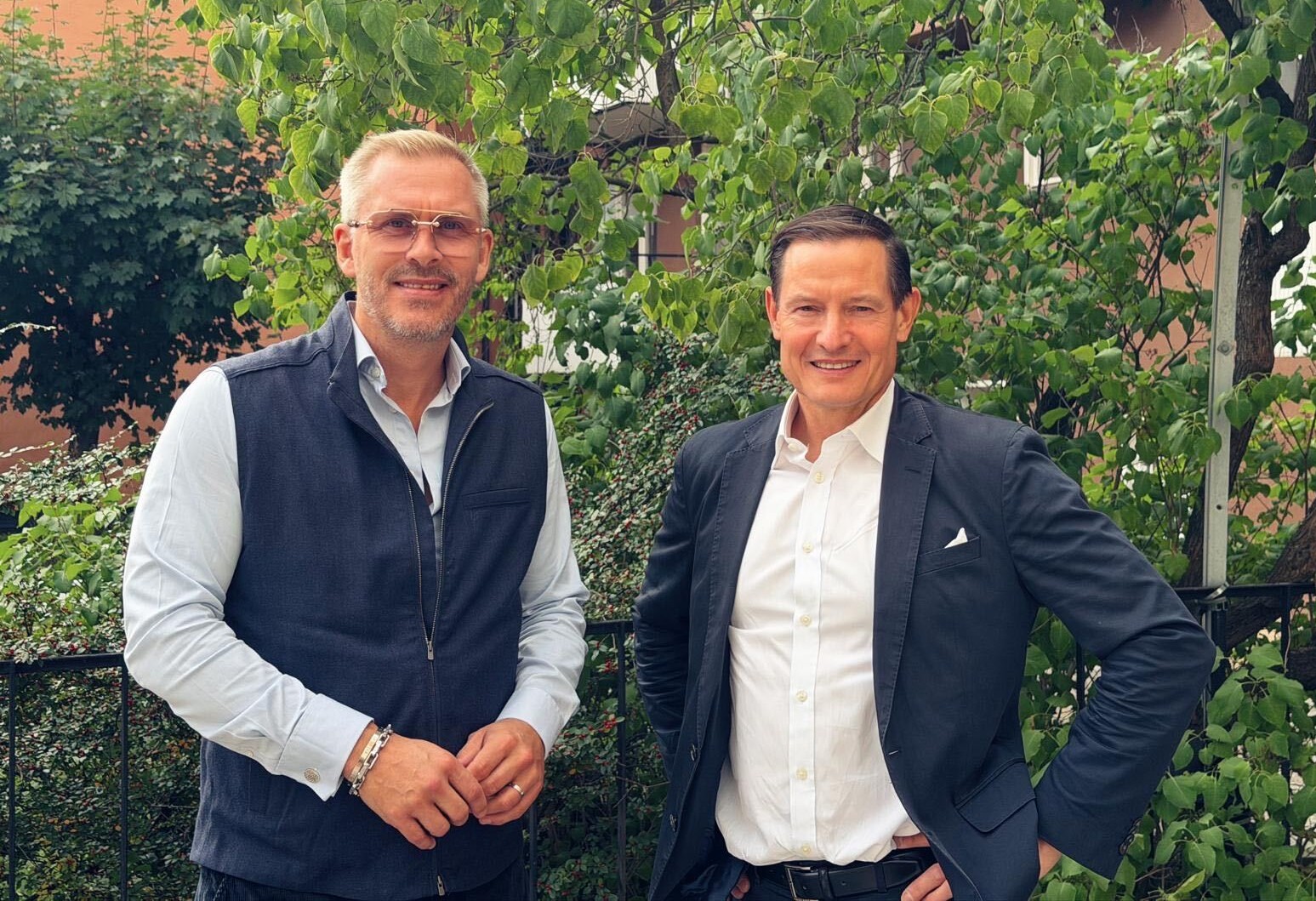
Hans Sterte & Klas Eklund
Dahlgren Capital
*Disclaimer: This monthly letter is for informational purposes only and should not be construed as financial or investment advice. It does not constitute an offer to buy or sell any security or financial product, nor does it provide an explicit or implicit investment recommendation. The views expressed reflect current market conditions and are subject to change. We strongly encourage readers to conduct their own research and seek independent financial, legal, or other professional advice before making investment decisions. Neither the authors nor Dahlgren Capital accept any liability for any loss or damage arising from reliance on this analysis.